ENGLISH FOR DEAF AND HARD-OF-HEARING STUDENTS: SYSTEMATIZING PARTS OF SPEECH THROUGH COLOR CODING AND MASTERING PRESENT SIMPLE WITH "TO BE"
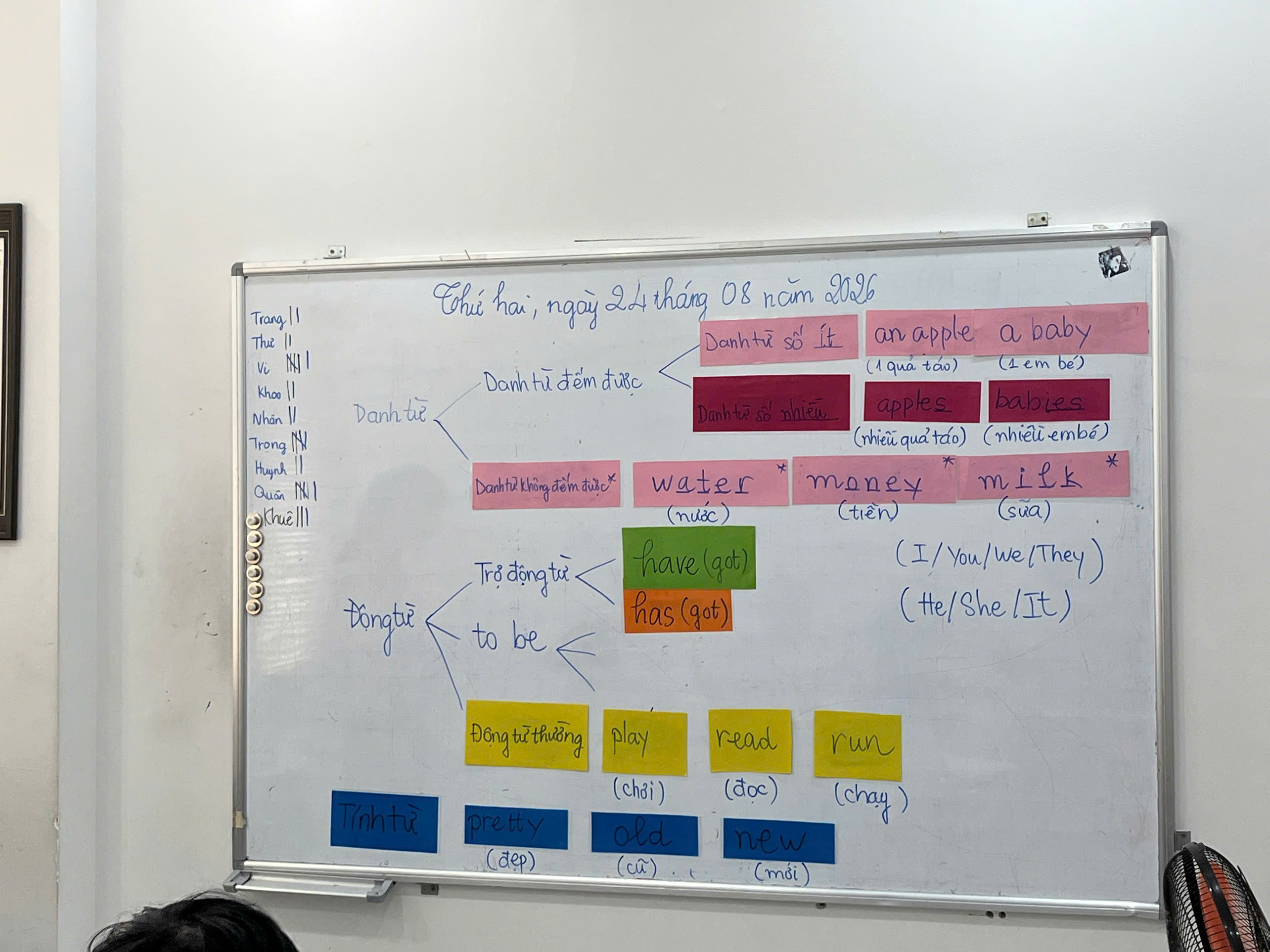
On August 24 and August 26, 2026, within the framework of the collaborative research project between the Center for Educational Research on the Deaf (CED) and students from the Faculty of English Language Education (Saigon University), 10 students in the STEM class participated in two specialized English sessions. The core lessons included completing the "Color-Coded Parts of Speech System" mind map worksheet, taking a comprehensive progress assessment, and mastering the Present Simple tense with the verb "to be" across three sentence structures (Affirmative, Negative, and Interrogative).
To make abstract grammatical rules tangible, instructors implemented visual-kinesthetic interactive methods:
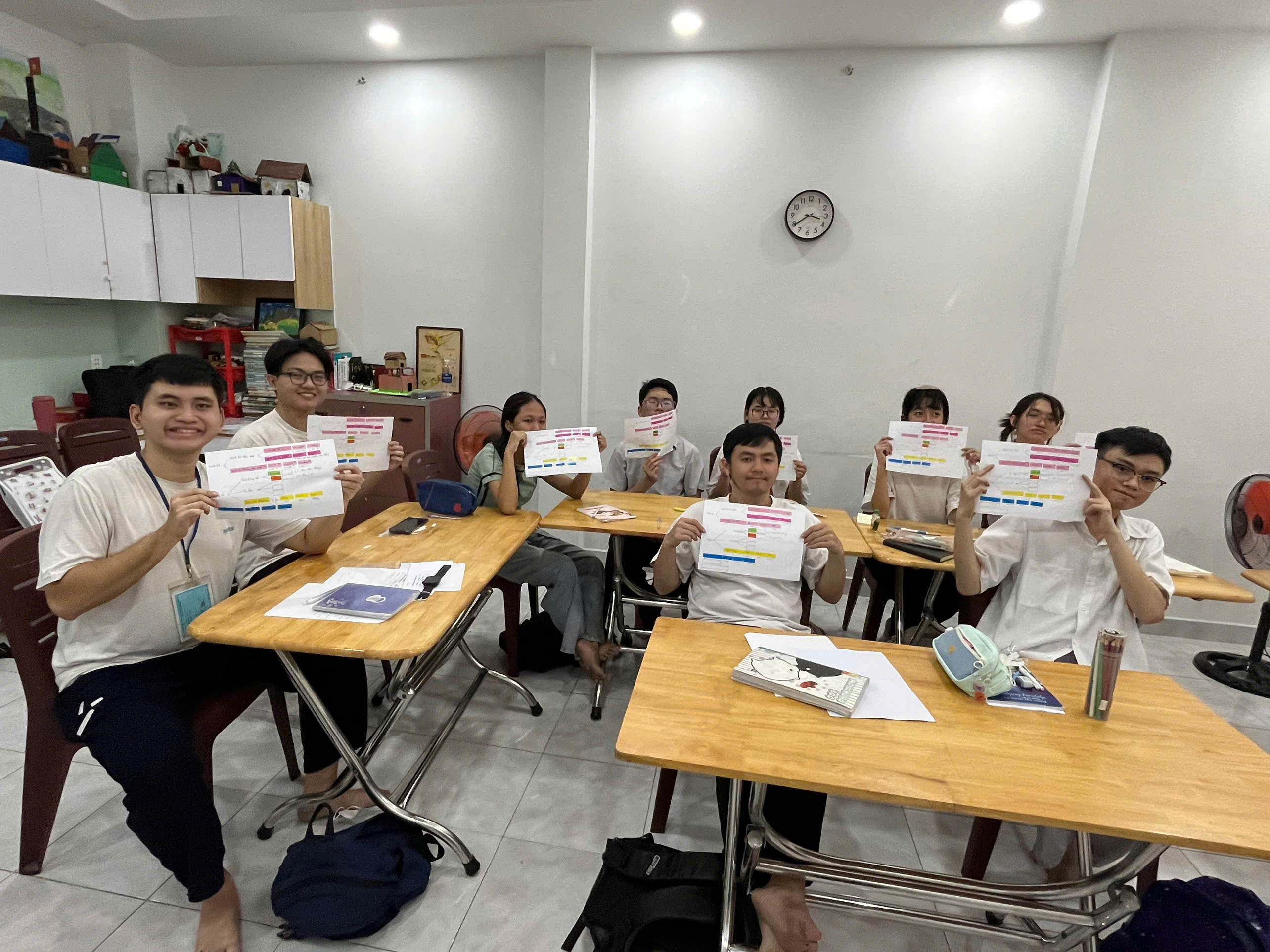
● Systematizing Parts of Speech via Color-Coded Crafting: Students classified, and pasted colored tags representing Nouns (countable/uncountable, singular/plural), Verbs (to be, auxiliaries, ordinary verbs), Adjectives onto their individual mind maps to reinforce syntactic patterns visually.
● Competency Evaluation via Comprehensive Assessment: Students completed a structured review test to consolidate previously learned concepts.
● Mastering Three Forms of Present Simple with "to be": Exploring Affirmative (+), Negative (-), and Question (?) patterns using matching color cards for subject pronouns and am/is/are, practicing sentence transformation and Yes/No question responses through active board drills.
All 10 students successfully finalized their own color-coded grammar mind maps with high accuracy in word categorization. With the Present Simple tense, students promptly grasped the inversion rule for questions and negative negation placement, confidently producing complete, accurate simple sentences.